

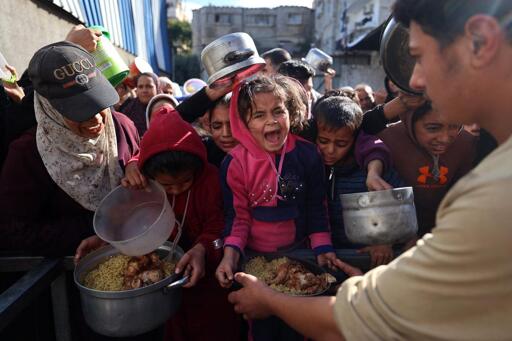
On December 31, several dozen international non-governmental organizations (NGOs) expect to find out whether Israel will permit them to operate in the Gaza Strip. Most of these humanitarian actors have been present on the ground for years, with mandatory accreditation from Israeli authorities.
In a joint statement published on December 17 with more than 200 international and Palestinian organizations, United Nations agencies warned that their exclusion would have “a catastrophic impact on access to essential and basic services” needed by some two million Palestinians surviving amid ruins, winter floods and a fragile ceasefire after two years of a devastating war waged by the Israeli army following the Hamas terrorist attacks on October 7, 2023.
The new directives require international NGOs to submit lists of their Palestinian staff, who are then subject to security vetting, and to refrain from any activity deemed to “delegitimize the State of Israel” – a criterion considered vague and politicized by humanitarian workers and diplomats. If vetoed, an NGO loses the right to have international staff in Gaza or to bring in aid – a ban already affecting dozens of organizations whose status has been in limbo since March. Israeli authorities defended the move as a means to exclude any “hostile” actors. NGOs see it as the politicization of humanitarian assistance and a drastic tightening of working conditions.
Some excerpts.
The new directives require international NGOs to submit lists of their Palestinian staff, who are then subject to security vetting, and to refrain from any activity deemed to “delegitimize the State of Israel” – a criterion considered vague and politicized by humanitarian workers and diplomats. If vetoed, an NGO loses the right to have international staff in Gaza or to bring in aid – a ban already affecting dozens of organizations whose status has been in limbo since March. Israeli authorities defended the move as a means to exclude any “hostile” actors. NGOs see it as the politicization of humanitarian assistance and a drastic tightening of working conditions.
Of the roughly 100 international NGOs affected by the new procedure, half refused to submit applications, arguing the rules violated humanitarian principles. About 50 others (facing the December 31 deadline) applied for accreditation. Some of them declined to submit their employee lists, fearing how the data might be used.
Save the Children. The NGO filed an appeal, including before Israeli courts, while continuing its work on the ground thanks to more than 300 Palestinian employees, local partners and purchases from the local market
COGAT downplayed the role of NGOs with unresolved status, claiming “the daily volume of aid entering Gaza does not depend on [them], and enforcement of the law will not lead to a future reduction in the scale of humanitarian aid.”
Yet UN staff (apart from UNRWA) are limited in the enclave, and the agencies rely on local NGOs, who serve as the backbone of aid delivery.
The threats of a ban have already claimed one victim: public advocacy. Faced with the risk of being banned, in a context of humanitarian emergency for Gazans, many NGOs are now keeping a low profile or speaking out anonymously.
This is a reaction by Israel to the spread of misinformation by NGO‘s. Prime example are the repeated exaggerated claims of famine, that are then retracted a couple of months later. NGOs also serve to launder misinformation and propaganda from Hamas. You can easily observe this, because they never talk about executions by Hamas or victims of friendly fire, i.e. Palestinians killed by defective Hamas rockets that fall short or the ubiquitous booby traps.
This is an overblown reaction by Israel to keep committing genocide while the world watches.
FIFY
