Before the Raspberry Pi came out, one cheap and easy way to get GPIO on a computer with a real operating system was to manipulate the pins on an old parallel port, then most commonly used for print…
Edit: It has come to my attention that it isn’t actually the people behind the Pi doing this. I really should read more rather than jumping to conclusions. There’s a few obvious rewrites I could make, but I think the prediction at the end is still valid even if the route I took wasn’t the right one.
This would appear to indicate that someone in charge of product design at Pi HQ is a Gen X-er or Boomer desperate to relive computing history through their own products.
Computer on a board. Bigger computer on a board. Computer entirely within a keyboard.
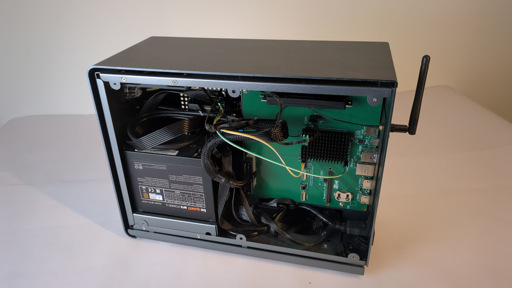
And now a computer in a PC-like case.
Prediction: The next step will be some kind of ARM-based cloud service.


Edit: It has come to my attention that it isn’t actually the people behind the Pi doing this. I really should read more rather than jumping to conclusions. There’s a few obvious rewrites I could make, but I think the prediction at the end is still valid even if the route I took wasn’t the right one.
This would appear to indicate that someone in charge of product design at Pi HQ is a Gen X-er or Boomer desperate to relive computing history through their own products.
Computer on a board. Bigger computer on a board. Computer entirely within a keyboard.
And now a computer in a PC-like case.
Prediction: The next step will be some kind of ARM-based cloud service.