

Riddick3001
European 🇪🇺
- 173 Posts
- 317 Comments

 71·3 days ago
The EU really should.
 3·4 days ago
Might this somehow also explain why France has ordered a € 10 B next gen. nuclear aircraft carrier ?
Not my best choice for OP link, so here’s the original news NOS NL
It doesn’t happen every day that a Dutch entrepreneur says ‘no’ to $500 million. Pim de Witte did when OpenAI, the American company behind ChatGPT, reportedly offered him this astronomical amount for his company. But De Witte now wants to do what the Americans planned with his data himself.
" When it happened, I immediately thought: my God, did I make the right decision?" Pim de Witte
The fact that this game data proves so important for the development of robots is a “surprising development,” says Deborah Nas, professor of innovation at TU Delft. She explains why games are suitable as training material: “The footage has always been shot from the same perspective, so it’s very stable material. You also play such a game with a console. In the real world, robots are controlled with the same gaming console.”
OpenAI also saw this and reported to De Witte. At least, that’s how several media reports. De Witte cannot confirm that that company offered him a sum of $500 million, “but I can tell you what it’s like to turn down 500 million,” he says with a smile. “You look yourself in the mirror just as closely, and you slap your face a few times with some water and then you pick up the phone.”
In that telephone conversation he said ‘no’ to an amount that many entrepreneurs can only dream of. “When it happened, I immediately thought, my God, did I make the right decision?”
Nice to do it yourself’ De Witte decided: what the Americans can do, I can do myself. According to De Witte, the data that Medal.tv has is so unique that he expects to have a significant lead in further developing this AI technology. “We got to work and found out we can catch up with them. And yes, then you can become worth more than what they pay, right? And it’s just more fun to do it yourself.”
Six months after the million-dollar offer, De Witte still supports his decision. Investors are queuing up for his new company General Intuition. With that company, De Witte is now working on developing AI systems that mimic spatial understanding, the so-called ‘world models’. In a short time, De Witte has already raised more than 130 million dollars, and investors would still be willing hundreds of millions of dollars to invest.
“A lot is expected from these models, but it’s still a huge promise,” says Professor Nas. “And whether that promise is delivered in AI land is always something you need to see.”
Competition China and USA Developments in the field of AI have so far been mainly an American and Chinese matter. De Witte hopes to change that with his new company. “I think we have a really good chance from Europe, and we have one of the best opportunities from the Netherlands.”
Professor Nas is also hopeful. “I think this technology certainly offers an opportunity for Europe because we have a lot of talent. You need a lot of mathematics and physics to develop these types of models and we have very good university courses for that in Europe.”
I’d forgotten about that. It’s always been so utterly suspicious. I remember watching some docs.
Just found this docu link
This article creates a weird context. They are glueing here Trump’s intervention to the question whether the people want a regime change. I think those are two separate topics.
I don’t think anyone condones this Trump intervention, and I agree that it is disturbing and can have far-reaching consequences.
Apart from this, it’s Interesting to read how some journalist keep interviewing people living in a dictatorship and then call that public opinion. The quoted poll was made by a Venezuelan based company by a survey of 1200 ( maybe pre selected) individuals. Also according to UN officials the opposition has won the elections in Venezuela. If you wonder how the 8 million Venezuelans that have fled the country would feel about regime change per 12 dec 2025 ( The Hill):
" Venezuelans cite the same reasons for leaving: the impossibility of earning a stable income, the collapse of basic services, insecurity and the certainty that life will not improve under an authoritarian regime. These motivations have remained consistent regardless of U.S. foreign policy.
Those who leave sure tell a different story. I wonder why?
Some good news for the British youngsters.
Context by Techspot October 2025: Reverse-engineering ASML isn’t going great for China, engineers allegedly broke the machine trying. A costly mistake.
context: ASML Holding is the Dutch company that develops the world’s most advanced chip manufacturing machines. Many are attempting to replicate ASML’s technology, but, if the rumors coming from China are to be believed, they still have a long way to go
Could be the new account. We’ve had many new accounts delete themselves after 3 hours… Since @valmond was surprised about it all, I thought this OP might be his new account .
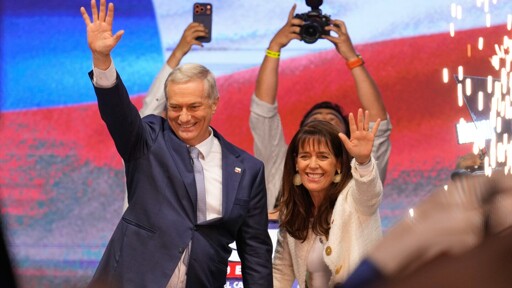
Maybe beacuse this new President Kast, is from a rich family. Or maybe because his father was a Wehrmacht officer and member of the NSDAP? Maybe beacuse Rubio was quick to congratulate him. Take your pick.
Add. Most newspapers call him " ultra right".



good covers with the orange man.
Holy shit! Der Spiegel really have been busy. Some really good ones too.
The Trumptator never smiles, that’s why he looks so odd on this pic.
Haha, oh absolutely.
Added; I just found a term which may describe our pov: Functional Federalisation.
FYI @buffalox : There appears to be a strong discussion about the question whether European Union is actually federation.
In my view, but that’s just a POV, it’s a form of (loose) federation because memberstates cede power to a supranational entity ( The EU). On the other hand memberstates still hold lots of Souverignity and self Governing power, and that would be an argument against calling it a federation in a classic sense
Anyway to avoid any prejudice I personally use the term "The European Project" .Whatever it is, there is nothing like it anywhere in the world.
So I’m not sure it is possible to do except by NOT having a central government.
Of course there are solutions The principle of subsidiarity is one. Doing projects between states like you said are another for example. Problem is always that people be people, and they like power and money. And also there is little any "piece of paper" can do against dictators with guns. No piece of law will probably ever change that, I’m afraid.
And state rights are systematically trumped by the federal government, and there is no reason to think the same won’t happen in EU over time, if we make a similar power structure.
Yes, true we must therefore build strong counter measures in this new European Federation. Its technically already a (co) Federation. But while we heed their mistakes we can prevent them.
let’s not copy the American declaration of independence.
Of course, I’m also having an allergic reaction to this title. and happy to see already 2 allergic comments apart from my own idea.
This was basically the scope of EL Pais, probably beacuse of recent developments.
The original declaration and the term United States of Europe was used by the founder of Europe Jean Monnet and coined by Victor Hugo in the mid 19th century or so. I’ve read somewhere that a Polish guy has used it even earlier.
Just look how bad it works in USA
How and why are you comparing this proposal to the US?!
There are many many federations in the world like, India Brazil, Switzerland etc.
The “European Federation - Fédération européenne - Europäische Föderation - Federacja Europejska”…etc
if you really have to change the name.




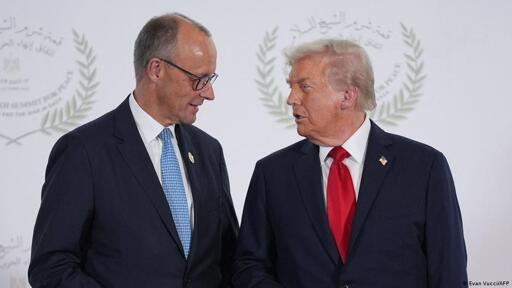
Just found this great quote in the article: Michel Duclos, a former senior French diplomat (…) said:
“Dmitriev celebrated in Miami, Breton denied US visa: Europe is becoming the new Russia for Washington. It brings to mind the 1920s – America favouring the former enemy [Germany) against its former allies – but worse.”