- 18 Posts
- 180 Comments


 6·9 days ago
The Swiss one also includes local buses, trams and so forth run by the local government. This is just regional rail and long distance buses.
Not with this pass though. It only includes regional trains and long distance coaches run by the federal government. So local buses, metro, trams and so forth are not part of it.
France, Spain, BeNeLux and the Nordics tend to be against watering it down. Since this needs a qualified majority to pass, the law has a good chance of standing.
Compared to the 2022 numbers it would put the US into 6 place in terms of migrants countries of origin. Obviously Ukraine was top, but second place Syria was at only 16.276. If you want to look at it another way last year there were 166,143 people born in the Netherlands. So 6,700 Americans making the move is noticeable.
Moving to another country is hard and few people actually do it. So those numbers tend to be low.
In other words Europeans are evil by default, so it is best to ignore any sort of complexities in it and treat all of them as the evil race of people they are, but you put it into some leftists speak to make yourself look not racist.

Since the question is clearly meant to be rethorical, but it seems none obvious to me:
- How does Slovakia, which was part of Austria.Hungary, which did not hold land outside Europe, benefit as much from colonialism as France, which had massive pieces of land?
- The Irish claim that British rule over Ireland was a form of colonialism. So how did they benefit from that as much as the Dutch did from controlling Indonsia?
- Why is there no difference between the size and time countries had colonial Empires at all? Germany had one for 30years or so, but Spain for centuries.
That is really complex. The imperialism of France is very different to that of Slovakia for example and the EU has members with everything in between.
Ariane6 can compete with Falcon9, but the German start up rockets are much smaller. They also have not had a successfull launch, although Isar Aerospaces Spectrum has had a lift off.
There is nothing about workers rights in there as far as I can tell. Certainly nothing about 60h work week. The union letter is basically just complaining about workers rights, without specifying which rights specifically and effected by what exactly.
Any sort of source for that law? I can not find anything…
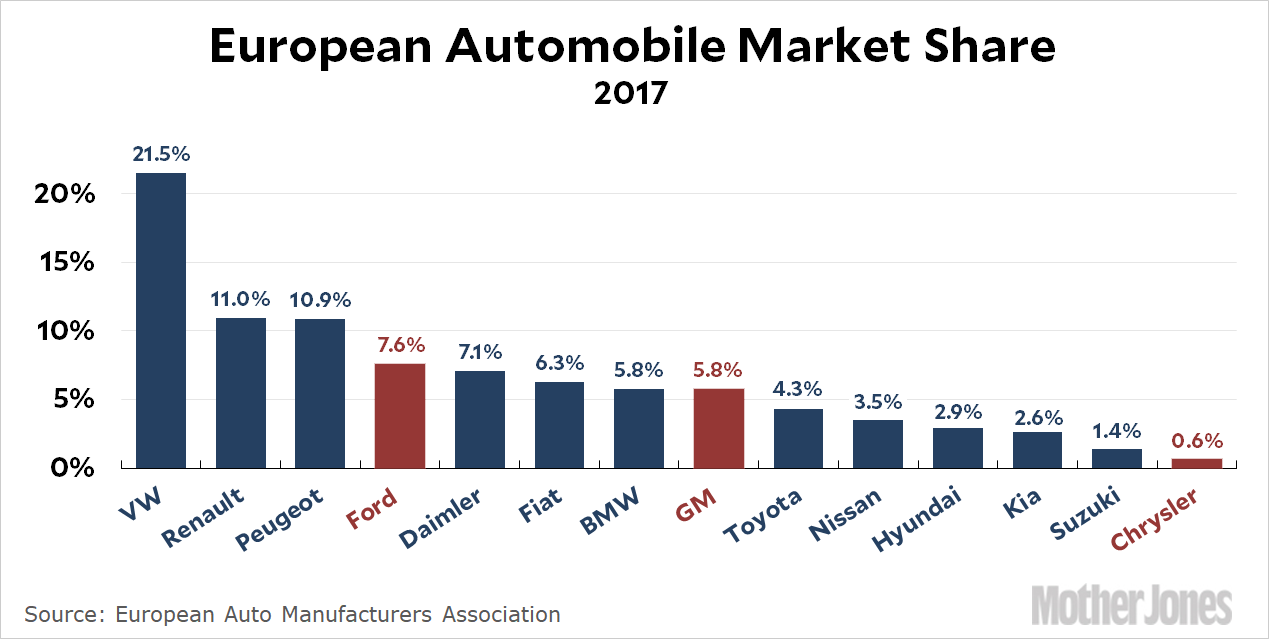
That btw used to be much larger. Opel, which was owned by GM for ages, was competing for the number one position in Germany for decades. Similar story for Vauxhall in the UK. Ford was also a pretty decent for a long time.
The German car industry is transitioning from ICE to EV and that means building up factories for EVs hiring a lot of people and then firing the ICE workers, when those car sales are going down. That is what is happening right now. They just cry for subsidies and obviously the oil industry is pissed off as well.
It is really intressting that the Chinese seem to replace the Americans and Japnese, but not the European manufacturers.
Usually NATO secretary is European, currently that is Rutte and the NATO commander is American currently Grynkewich. So this would give Europe a lot more power within NATO.

Those massive parking lots are all around the large highways already. Again the truckers have to take those breaks due to labor law. Also electric trucking even long distance is a thing already. The main issue is that the trucks are too expensive, but prices are falling.
Obviously trains are the real solution for long distance. However those also need more tracks to be laid to have the capacity necessary to replace some trucking.
EU driving time regulation requires a 45min break every 4.5h of driving. Maximum permitted road speed is 100km/h. So what you really need is 450km of realistic range so probably more like 500-600km range as stated by the manufacturer and fast chargers on all highway stops, which are able to charge up the trucks. Those kinds of trucks and at least some chargers are around in Europe already. Just a matter of deploying them.
Those trucks are also a very good choice, if you want to drive to and from a large freight rail yard or port.
The big problem with Big Tech is that nobody knows what they actually do with the data and what exactly the programs do. So it is very easy for the US to have back doors and use them to spy on European organizations. If they host the software, they also can shut them down. That is much much harder with self or locally hosted open source.
That is one of the areas Germany is improving in quickly. In the last two years the share of private residence and offices connected to the fiber network have gone up from 18.3% to 27.3%. With homes passed going up from 35.6% to 52.8%.









Nope outside of Germany.