- 2 Posts
- 37 Comments

 1·5 months ago
Because it’s arbitrary discrimination against their exporters. This is putting aside the forced purchases and investments Trump is demanding of various countries.
All these TACO memes are wearing pretty thin. Trump has instituted a minimum of 10% tariffs on all trading partners, with scant prospect of them ever lowering in the future even after his presidency (once tariffs go up, it’s very hard to bring them down because of the special interests that come to depend on them). He has strongarmed the EU, Japan, and other countries into accepting these permanently elevated tariff levels without retaliation. Only 3 countries have shown any sort of backbone against this: China, Canada, and Brazil (maybe India, but it’s too soon to say). In all the other cases, Trump ain’t the one chickening out, it’s the other side that abjectly folded.
(It doesn’t matter, by the way, if the Europeans intend to slow walk the investments and weapon purchases they promised to Trump, or whatever. That’s copium. The point is that they bent to Trump’s will, and once you cave to a bully, he’ll be back for more.)
That was the rice minister (really).
 21·5 months ago
In some dimensions, current day LLMs are already superintelligent. They are extremely good knowledge retrieval engines that can far outperform traditional search engines, once you learn how properly to use them. No, they are not AGIs, because they’re not sentient or self-motivated, but I’m not sure those are desirable or useful dimensions of intellect to work towards anyway.
The kneejerk reaction is gonna be “Meta bad”, but it’s actually a bit more complicated.
Whatever faults Meta has in other areas, it’s been mostly a good player in the AI space. They’re one of the major reasons we have strong open-weight AI models today. Mistral, another maker of open AI models and Europe’s only significant player in AI, has also rejected this code of conduct. By contrast, OpenAI a.k.a. ClosedAI has committed to signing it, probably because they are the incumbents and they think the increased compliance costs will help kill off competitors.
Personally, I think the EU AI regulation efforts are a big missed opportunity. They should have been used to force a greater level of openness and interoperability in the industry. With the current framing, they’re likely to end up entrenching big proprietary AI companies like OpenAI, without doing much to make them accountable at all, while also burying upstarts and open source projects under unsustainable compliance requirements.
The EU AI Act is the thing that imposes the big fines, and it’s pretty big and complicated, so companies have complained that it’s hard to know how to comply. So this voluntary code of conduct was released as a sample procedure for compliance, i.e. “if you do things this way, you (probably) won’t get in trouble with regulators”.
It’s also worth noting that not all the complaints are unreasonable. For example, the code of conduct says that model makers are supposed to take measures to impose restrictions on end-users to prevent copyright infringement, but such usage restrictions are very problematic for open source projects (in some cases, usage restrictions can even disqualify a piece of software as FOSS).
Pretty much the same set of circumstances as in Europe. Slow economic growth + dissatisfaction about young voters + inflation + establishment party lacking any plan beyond muddling along => populist revolt => governing gets even harder and things get worse.
France already has one of the most progressive tax systems in the OECD. Their main problem is the opposite: the tax system is too narrow. Generally, European welfare states function by levying high taxes on everyone. Problem with France is that they try to have a welfare state without taxing the middle class enough. For example, it levies 5% lower VAT than the Nordics, and grants lots more exemptions.
Fermentation-made milk substitute was available at supermarkets in Singapore (under the brand name Very Dairy, though the original product was from the startup Perfect Day). I really liked it—a lot nicer than oat milk for drinking straight up. Unfortunately it went off the shelves after a while, seems like demand wasn’t high :-(
I’m curious whether Deepseek will gaf about this. They’ve been rather uninterested in commercialization, and the app is mainly a way of showing off their model, which itself is released open-weights. In fact, it’s literally impossible to spend money in the app! They sell tokens but it’s API-only, and you can’t spend it in the app.
So it’s entirely possible the Deepseek will shrug, let their app be banned in Germany, and keep doing what they’re doing.
By that metric, you can argue Kasparov isn’t thinking during chess, either. A lot of human chess “thinking” is recalling memorized openings, evaluating positions many moves deep, and other tasks that map to what a chess engine does. Of course Kasparov is thinking, but then you have to conclude that the AI is thinking too. Thinking isn’t a magic process, nor is it tightly coupled to human-like brain processes as we like to think.
Pretty sure it’s at least semi-autonomous. In the video you can see the bots react to hits and recover their footing, there’s no way a human can control all those reflex actions in real time.
More specifically, the Hong Kong protests were about the possiblity of HKers being sent to the mainland. Here and now we have multiple actual renditions of US residents to El Salvador and elsewhere (including one of the protesters!)…
I gotta say, Hong Kongers put up way more of a fight than Americans seem to be. Hong Kong Polytechnic University went through a full blown siege in 2019. Six years later, in the land of the free, student leaders get picked off and any protests that manage to get going are easily crushed by the police.
The “cheap Chinese labor and lax laws” thing is not exactly the issue, at least not these days. The thing is that Chinese industry has spent decades working out how to refine these minerals, and they’re the only ones who are now able to do it at scale. So other countries that extract and process rare earths (which as noted aren’t actually that rare) often ship semi-processed ore to China for final processing.
Sure, other countries can replicate these capabilities if they’re willing to put in the effort. It’s like China’s challenge with EUV lithography, but in reverse. It will take significant time. Also, building up a rare earths processing industry probably involves not just spending capital, but also major environmental risks while you’re doing your trials.
That article is overblown. People need to configure their websites to be more robust against traffic spikes, news at 11.
Disrespecting robots.txt is bad netiquette, but honestly this sort of gentleman’s agreement is always prone to cheating. At the end of the day, when you put something on the net for people to access, you have to assume anyone (or anything) can try to access it.
It’s seldom the same companies, though; there are two camps fighting each other, like Gozilla vs Mothra.
It’s possible to run the big Deepseek model locally for around $15k, not $100k. People have done it with 2x M4 Ultras, or the equivalent.
Though I don’t think it’s a good use of money personally, because the requirements are dropping all the time. We’re starting to see some very promising small models that use a fraction of those resources.
So long as there are big players releasing open weights models, which is true for the foreseeable future, I don’t think this is a big problem. Once those weights are released, they’re free forever, and anyone can fine-tune based on them, or use them to bootstrap new models by distillation or synthetic RL data generation.
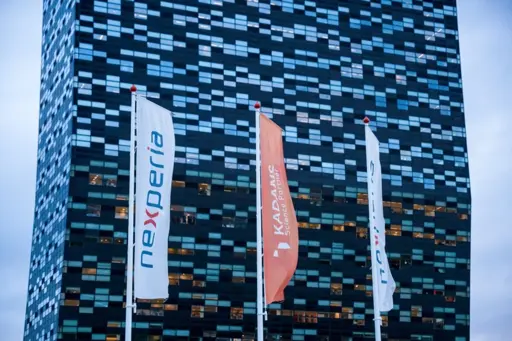
He took over a failing Dutch tech company and turned it around. Nexperia was on the path to bankruptcy, that’s why it was on the market to be sold back in 2017. His company injected capital and made it profitable. Even last year, his parent company even announced a $200M expansion of Nexperia’s Hamburg plant, which totally goes against the narrative that they were moving production out of Europe.
The Dutch govt is trying to spin this, but they have like 5 different storylines and none of them make sense.