

2·
3 days agoIt is technology in development. Off-shore wind power also had to solve a lot of difficulties but it is working now.
It is technology in development. Off-shore wind power also had to solve a lot of difficulties but it is working now.

I am. I have 16 GB on my 15 year old eight-core PC, run virtual machines, and need barely half the RAM. My laptop is a Thinkpad T490 and is totally fine. My Linux phone runs fine with 5 GB right now.
The great thing about wave energy that it is the endless ocean surface which both stores the energy, and transports it through space and time.
By this way, the energy can be harvested far away from the time at which the wind was blowing, and far away from the place where it created waves.
As such, wave power is an ideal complement to wind and solar energy, because it can fill up the grid at the times when the latter are lacking - without expensive storage devices, because the storage, which is the ocean surface, is already there.
Pelamis Wave Power Converter feeding Energy into the grid
More info on this at
https://en.wikipedia.org/wiki/Pelamis_Wave_Energy_Converter .
The company was bought by E.ON and the project was killed. At that time, there were working 450 Kilowatt prototypes (see the video). 450 Kilowatt is a power volume that took wind power plants over three decades (about from 1970 to 2000) to achieve.
The technology was then apparently copied by a Chinese company.
even the waste heat from the compression could be used to achieve more compression
No. Waste heat (which is always low-temperature in respect to the device in question) can by definition not be converted to mechanical work. (Edit: to uninformed people downvoting this, this is nothing else than Carnot’s law in action.)
Otherwise, one could build a perpetuum mobile: Convert heat to mechanical work, use that work to generate heat, convert it to work again, and so on. You’d have a machine that generates energy out of nothing, and that’s not possible because of the law of energy conservation.
Compressing gas generates heat, and a significant part of that heat will be lost. Heat dissipation is irreversible, and this lowers efficiency a lot.
BTW the same reason why in industry, pneumatic drives are universally replaced by electric motors: Their efficiency is too low.
Related: Robotics pioneer Rodney Brooks saw this coming: https://arstechnica.com/ai/2025/10/why-irobots-founder-wont-go-within-10-feet-of-todays-walking-robots/
I think this is a well-written and important article.
One more aspect: The article lines out that todays control algirithms for robots are not inherently stable and can’t guarantee safety.
I have seen some code that runs in some if such humanoid robots and would like to add the following warning: the control code for robots is typically written by researchers, not safety experts. While there might be some brilliant programmers among them, such code will be, in most of the cases, a hot mess which cannot guarantee any safety. It will certainly not meet requirements which are commonly mandated for things like complex medical devices, automobiles, or other dangerous work equipment - but due to the much larger complexity and dangerous mechanical forces in such robots, the requirements should be higher than in automobiles.
Well, what the world really needs are laptops with built-in HVAC support!
Would you go near an uncontrollable maniac swinging a ten-pound sledgehammer, or stand two meters below a larger-than life bronce sculpture of Neptun with a harpoon, weighting 150 kilograms, which is not fixed, unstable and could at any moment fall upon you?
No? Then you should not go near such a robot.

Especially that diabolic number “zero”. It is a pure Arab invention. The Romans did fine without it. Then the Arabs introduced zero and we know what happened with the Roman Empire. Now, zeros can be found everywhere - they can even hide in computers. America should really exzerminate these zeros befote it is too late!!
The perfect combination of the disadvantages of capitalism and socialism!!
By that argument, you should already be learning Mandarin, the world language spoken by the largest number of people, and in what in future will be very, very likely the biggest industrial economy.
Fun fact, I was last summer in Ljubljana / Slowenia, and some shops already have signs in Chinese writing.
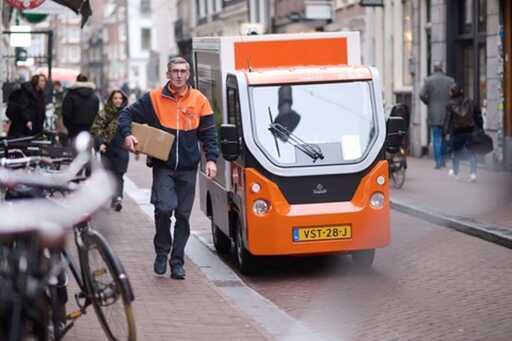
At that speed, most of the noise comes from the tyres. Slower = quieter.
Yeah, but is it useful to rob the Mona Lisa?
This would basically shory-circuit the EU’s open source strategy which is a cornerstone for efforts to reach some amount of digital sovereignty. It is especially incompatible with using Linux as a end-user or developer - taken at the letter, it would make Linux devices illegal because they are controlled by the user. It would also undermine security and confidentiality of any digital communication, and would have bad effects for digital economic communications in any business settings:
To sum up, apart from being destructive to civil rights, this would have massive negative consequences, because the goals are completely incompatible with other important goals.
Wouldn’t it be better to forbid these predatory features / dark patterns / addictive design etc. in a general way ? What is bad for young people is not good for older people either. There is a difference between free speech and using manipulation.
Yeah Brexit was a test run. Great Summary by Carole Cadwalladr “The great British Brexit Robbery” (published by the Guardian, de-published following pressure by Google, I guess, but can be found on the net).
I was completely spooked by the fact that these Brexiteers were using language in a Nazi-like way. At one point a former Thatcher minister was booed out of a conservative party assembly which shouted “he is a traitor!”.
More articles and reports on this summarized in this comment by Zerush@lemmy.ml:
https://feddit.org/post/21164189/9815515
Citing them:
Tech billionaires are systematically dismantling American democratic institutions through unprecedented concentration of wealth and power, with Europe potentially facing similar threats[1][2].
Peter Thiel, Elon Musk and other tech leaders are implementing an explicitly anti-democratic vision outlined in “The Sovereign Individual,” a 1997 manifesto that predicted nation-states would collapse as wealthy elites gain independence from democratic control[3]. This ideology sees democracy as incompatible with freedom and envisions a “cognitive elite” rising to power through cryptocurrency and internet technologies[2:1].
The strategy has three key components:
Direct Political Control: Tech billionaires like Musk have gained extraordinary influence through campaign spending and direct government roles. Musk now controls critical government infrastructure through his “Department of Government Efficiency,” modifying federal payment systems without oversight[4].
Institutional Capture: Wealthy tech leaders are systematically weakening government agencies and civil service protections. Trump’s “Schedule F” order could replace tens of thousands of civil servants with political loyalists vetted by conservative groups[2:2].
Alternative Power Centers: Billionaires are establishing autonomous zones and acquiring land in places like New Zealand as “boltholes” for societal collapse. Thiel obtained New Zealand citizenship despite spending only 12 days in the country[3:1].
The model draws from competitive authoritarian regimes where “elections are often fiercely contested battles in which incumbents have to sweat it out” but the system is rigged through government machinery to attack opponents and co-opt critics[2:3].
Europe faces similar pressures as tech companies resist regulation and establish parallel power structures. According to tech policy experts, the U.S. must not undermine European efforts to “regain sovereignty over their information systems and resist domination by Big Tech”[5].
Democracy persists as a legacy interface— maintained for stability, while being systematically hollowed out and replaced.
An eerie picture. In software engineering, exactly that has been called “The Strangler Pattern”.












Rust has traits and reference counting which map nicely to COM objects.
By the way, the Linux Kernel is OOP. That’s a good choice for things like queues, file systems, and device drivers.