You must log in or register to comment.


gives me this vibe, just replace erdogan with trump and turkey with, you know, the US
Savvy countries will discover there’s a way to mitigate the harm incurred by Trump’s tariffs
They already have. It takes 1.5 to 2 years for trade deals to be negotiated and then put into effect. In the coming years when these deals take effect, and trade is routing itself around the US as much as possible rather than through it, people in the US are going to learn a very difficult economic lesson.
On the plus side, maybe the notion of American Exceptionalism will diminish a bit, which is long overdue.
In my honest opinion, American exceptionalism should be dead and buried 6 feet under. And American patriotism and the American Dream should be revisited and revised and reformed
In my honest opinion, American exceptionalism should be dead and buried
Should be, but it’s such a deeply ingrained part of their national self image that it’ll take a few generations of consistent effort to make it fade away.
Will soon begin? My brother in Christ, it’s begun at least 20 years ago.
The frog being slowly boiled alive effect. Nothing is wrong until it’s too late and it’s obvious to anyone.
This shit wouldn’t be happening if Kamala had won.
We don’t want to be dependent of your shitty country
Kamala would have defended DMCA and Big Tech to the death. The only difference might have been a little less crypto grifting, but it’s nonsense to suggest there would have been a major difference on the issues this article is actually discussing.
The trends and forces would have been no different, but it was a choice between a collapse of empire versus a soft landing a la UK. They chose collapse.
I would not describe the state of the UK as a “soft landing”.
Not my tempo. I was talking about the loss of a global empire. Many have called the UK’s a “soft landing”, but even the hardest collapses so far will have been a different level of scale from what America is cooking up for itself.
Near best minimum wage on earth, free healthcare and a moat to keep the French out? Could be worse.
What, exactly, wouldn’t be happening if Harris had won?
For example, neither batshit tarrifs, nor insane dissolution of trust, if we’re talking purely about international economics.
Only that chances are that it’s the other way round. Trump was installed to sell the tariffs to the world.
neither batshit tarrifs,
That’s true. Harris, though, like Trump, wouldn’t be doing anything to regulate LLM’s or their financial fuckery, and that is going to be catastrophic when the game of financial musical chairs stops.
insane dissolution of trust
Also a good point. The American brand would be more or less intact, at least in the short-term, but I tend to think that all Harris would do is just maintain better PR, because her policies economically wouldn’t be different enough from Donald’s to keep the AI bubble from eventually popping. Democrats are just as in bed with billionaires as the Republicans, they just don’t seat them front-and-center at public events.
That’s a bit of a disingenuous question, no?
What the hell do you think would not have happened?
-
Doge?
-
The unlawful deportations to random
-
Ice?
-
countries with torture prisons?
-
War crimes in the Carribean?
-
The multiple trade wars?
-
The absolute dumping of all US allies off a cliff?
-
Bombing Nigeria because reasons?
-
The entire Epstein thing and the US president being a pedophile for the entire world to see?
And mind you, this is not a comprehensive list, I just gotta stop at some point or nobody will read it anymore.
Take a pick?
-
The whole trade war thing i guess
Late to the party? A little slow? Where have you been, author?
Over the past two decades, the office of the US Trade Representative–which is responsible for developing and coordinating US international trade, commodity, and direct investment policy—has pressured most of the world into adopting these laws, hamstringing foreign startups that might compete with Apple (by providing a jailbreaking kit that installs a third-party app store), or Google (by blocking tracking on Android devices), or Amazon (by converting Kindle and Audible files to formats that work on rival apps), or John Deere (by disabling the systems that block third-party repairs), or the Big Three automakers (by decoding the encrypted error messages mechanics need to service our cars). The rents that these digital locks help American companies extract run to hundreds of billions of dollars every single year.
The world’s governments agreed to protect this racket in exchange for tariff-free access to American markets. Now that the US has reneged on its side of the bargain, these laws serve no useful purpose.In 2026, many countries will respond to tariffs like they were still in the 19th century. But a few countries will have the vision, the boldness, and the political smarts to kick Donald Trump right in the dongle. The country that gets there first will enjoy the same relationship to, say, third-party app stores for games consoles, that Finland enjoyed in relation to mobile phones during the Nokia decade.
Hear, hear!
Trump didn’t cause it but he sure as hell accelerated its decline.
Who’s going to dominate trade? Cos people are hoping it won’t be an authoritarian state like China.
China is already the biggest trade partner of most of the world.
It’ll be China.
Won’t be China for long anyways, I think India will dominate soon ish, and keep your eyes out for Mexico
Why does any one country need to dominate trade?
A much better outcome would be that more countries have a larger number of trading partners rather than one behemoth monopolizing all trade.
Unless we live in a one-world government, the default set up is the Thucydides trap where one state tends to dominate.
If by people you mean feds and idiots then sure, personally I’m looking forward to more high speed rail
Thanks. 👍 💖
Paywall.
just disable javascript.
Full article:
In 2026, the leaders of America’s (former) trading partners are going to have to grapple with the political consequences of tit-for-tat tariffs. A tariff is a tax paid by consumers, and if there’s one thing the past four years have taught us, it’s that the public will not forgive a politician who presides over a period of rising prices, no matter what the cause.
Luckily for the political fortunes of the world’s leaders, there is a better way to respond to tariffs. Tit-for-tat tariffs are a 19th-century tactic, and we live in a 21st-century world—a world where the most profitable lines of business of the most profitable US companies are all vulnerable to a simple legal change that will make things cheaper for billions of people, all over the world, including in the US, at the expense of the companies whose CEOs posed with Trump on the inaugural dais. READ MORE
This story is from the WIRED World in 2026, our annual trends briefing.
In 2026, countries that want to win the trade war have a unique historical possibility: They could repeal their “anticircumvention” laws, which make it illegal—a felony, in many cases—to modify devices and services without permission from their manufacturers. Over the past two decades, the office of the US Trade Representative–which is responsible for developing and coordinating US international trade, commodity, and direct investment policy—has pressured most of the world into adopting these laws, hamstringing foreign startups that might compete with Apple (by providing a jailbreaking kit that installs a third-party app store), or Google (by blocking tracking on Android devices), or Amazon (by converting Kindle and Audible files to formats that work on rival apps), or John Deere (by disabling the systems that block third-party repairs), or the Big Three automakers (by decoding the encrypted error messages mechanics need to service our cars). The rents that these digital locks help American companies extract run to hundreds of billions of dollars every single year. The world’s governments agreed to protect this racket in exchange for tariff-free access to American markets. Now that the US has reneged on its side of the bargain, these laws serve no useful purpose.
US tech giants (and giant US companies that use tech) have used digital locks to amass a vast hoard of ill-gotten wealth. In 2026, the first country bold enough to raid that hoard gets to transform hundreds of billions in US rents into hundreds of millions in domestic profits that launch its domestic tech sector into a stable orbit—and the remaining hundreds of billions will be reaped by all of us, everyone in the world (including Americans who buy gray-market jailbreaking tools from abroad), as a consumer surplus.
In 2026, many countries will respond to tariffs like they were still in the 19th century. But a few countries will have the vision, the boldness, and the political smarts to kick Donald Trump right in the dongle. The country that gets there first will enjoy the same relationship to, say, third-party app stores for games consoles, that Finland enjoyed in relation to mobile phones during the Nokia decade.
There are many countries with the technical nous to pull this off. Obviously, Canada and Mexico have pride of place, since Trump has torn up the USMCA agreement he arm-twisted them into in 2020, and heaped racist rhetoric on Mexico even as he threatened to annex Canada. Speaking of annexation targets with sizable communities of technical experts, the Danes could lead the EU out of the wilderness the bloc bargained its way into when they enacted Article 6 of the Copyright Directive in 2001. Then there’s the global south: African tech powerhouses like Nigeria, South American giants like Brazil, and the small, developed Central American states who’ve seen Trump renege on the Central American Free Trade Agreement (CAFTA), like Costa Rica.
Retaliatory tariffs make consumer goods in your own country more expensive, and to the extent that they punish Americans, they do so indiscriminately, inflicting far more pain on soybean farmers than they do on the CEOs of the tech companies that back Trump.
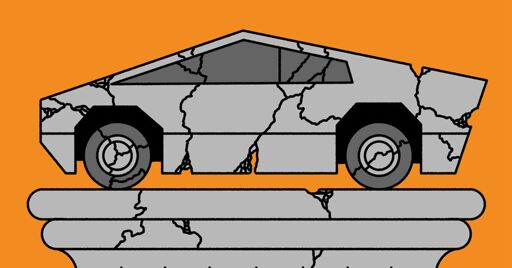
Repealing anticircumvention law is a targeted strike on America’s most profitable companies, and it will have an especially severe impact on Tesla, whose hyperinflated price-to-earnings ratio reflects investors’ pleasure at the Tesla business model, which involves charging drivers every month for subscription features and software upgrades that expire when a car changes hands. Musk owes his power to the digital locks that keep this business model intact. If it were legal for mechanics all over the world to jailbreak Teslas and unlock all those features for one price, Tesla’s share price would collapse—taking with it the overvalued shares Musk uses to collateralize the loans he took out to buy Twitter and the US presidency.
In 2026, world leaders have a choice—to make things cheaper and better for all of us, or to fight Donald Trump with weapons that were developed in the Age of Sail.